
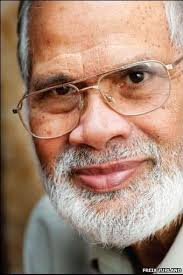
Biography
Abdul Wahab was born in what is now Bangladesh, at a time when the subcontinent was still under British rule. He lived through the seismic ruptures of the twentieth century: Partition in 1947, when his homeland became part of Pakistan, and Bangladeshi independence in 1971. These three national identities layered across a single lifetime gave him a particular understanding of belonging and change. He wore the name British Bangladeshi with pride.
In 1956 he arrived in England as a student, landing first in London where he spent around six months adjusting to a new country. Quickly realising that his English needed strengthening before he could pursue formal study, he worked while attending classes part-time, building the practical fluency that would serve him throughout his public life.
A friend arranged work for him at an Indian restaurant in Oxford, owned by an English proprietor. It was his first real introduction to the restaurant trade, a world he would re-enter years later in Bristol and which would prove foundational to his life here.
In 1958 he moved to Bradford, where a growing Pakistani community was finding work in the wool and cotton mills as those industries began their long decline. He settled quickly, joined the community, and was soon elected Secretary of the Pakistani Association.
In Bradford he observed something that troubled him: educated members of the community refused to work in public transport, viewing it as beneath their status. Wahab believed this attitude was holding the community back. He took matters into his own hands. Alongside a close friend, he deliberately applied for and worked as a bus conductor for six weeks, to demonstrate by example that honest work carries no shame. The taboo, in that corner of Bradford, was broken.
In March 1960 he moved to Bristol and opened one of the city's first Indian restaurants, the Kohenote, situated behind the Hippodrome on Denmark Street. Over the following years he expanded into a grocery shop and a second restaurant, building a modest but steady business in a city whose appetite for South Asian food was still in its earliest stages.
Recognising that spiritual and cultural life was as important as economic survival, he founded the Easton Muslim Association and helped establish Totterdown Mosque, which was Bristol's first, providing a permanent gathering place for the city's growing Muslim community. Bristol University students were among those who contributed to making it happen.
In the mid-1960s Wahab considered returning permanently to Pakistan with his family. He sold his house and two of his three businesses and made the move, only to find himself, in his own words, an odd man out. The Pakistan he had left years before had changed in ways he hadn't anticipated: little of his local business experience translated, corruption was rampant in ways he wasn't accustomed to, and an attempt to educate his children at an English-medium school run by Christian missionaries raised difficult questions about his decision. He lost significant money in the process.
In 1970 he returned to Bristol with his family and bought a house in Upper Knowle, where he would live for the rest of his life. One of his sons had been born in Bangladesh during the family's time away, a reminder of the complicated geography of a life lived across continents.
The following year, 1971, brought Bangladeshi independence. For Wahab it was a moment of renewal and responsibility. He founded the Bangladeshi Association of Bristol, Bath and West and served as its Chair for fifteen years. The association focused on language education, cultural preservation, and helping the community integrate while retaining their identity. Premises on Stapleton Road were purchased as a community centre offering Arabic lessons, Bengali language classes, and official support for newly arrived families navigating British life.
He joined Bristol Racial Equality Council and the Bristol Law Centre, now known as the Community Law Centre in Bedminster, and became an active campaigner for equality and justice for Black and immigrant communities across the city.
Among his most lasting practical contributions was pioneering translation and interpreting services in Bristol. He made the case to Avon County Council, presenting it methodically and persuasively, and they approved and funded the service. For the first time, non-English speakers in Bristol could access public services in their own language.
In 1975 he participated in the Taste of Orient exhibition at the Watershed, joining ethnic minority groups from across the world in celebrating cultural diversity at a time when such celebrations were still unusual in Bristol.
He also attempted to create a pan-Asian organisation bringing together Pakistani, Indian and Bangladeshi associations, a genuinely ambitious project that secured £120,000 in funding. The organisation folded while Wahab was on an extended visit to Bangladesh, a setback he accepted with characteristic equanimity.
In 1991 he co-founded Aashyana Housing Association alongside Pakistani and Bangladeshi colleagues. Aashyana was created to help South Asian people navigate the housing system despite the language barriers that Wahab had encountered himself in his early years in England. The association partnered initially with Knightstone, then Housing 21, then Affinity Sutton, and grew to manage over 200 homes with a diverse range of tenants. Wahab ran the association for fifteen years and successfully registered it with the Housing Corporation.
In recognition of decades of work breaking down barriers for immigrant and Black communities across the South West, he was awarded the MBE for race relations and community service.
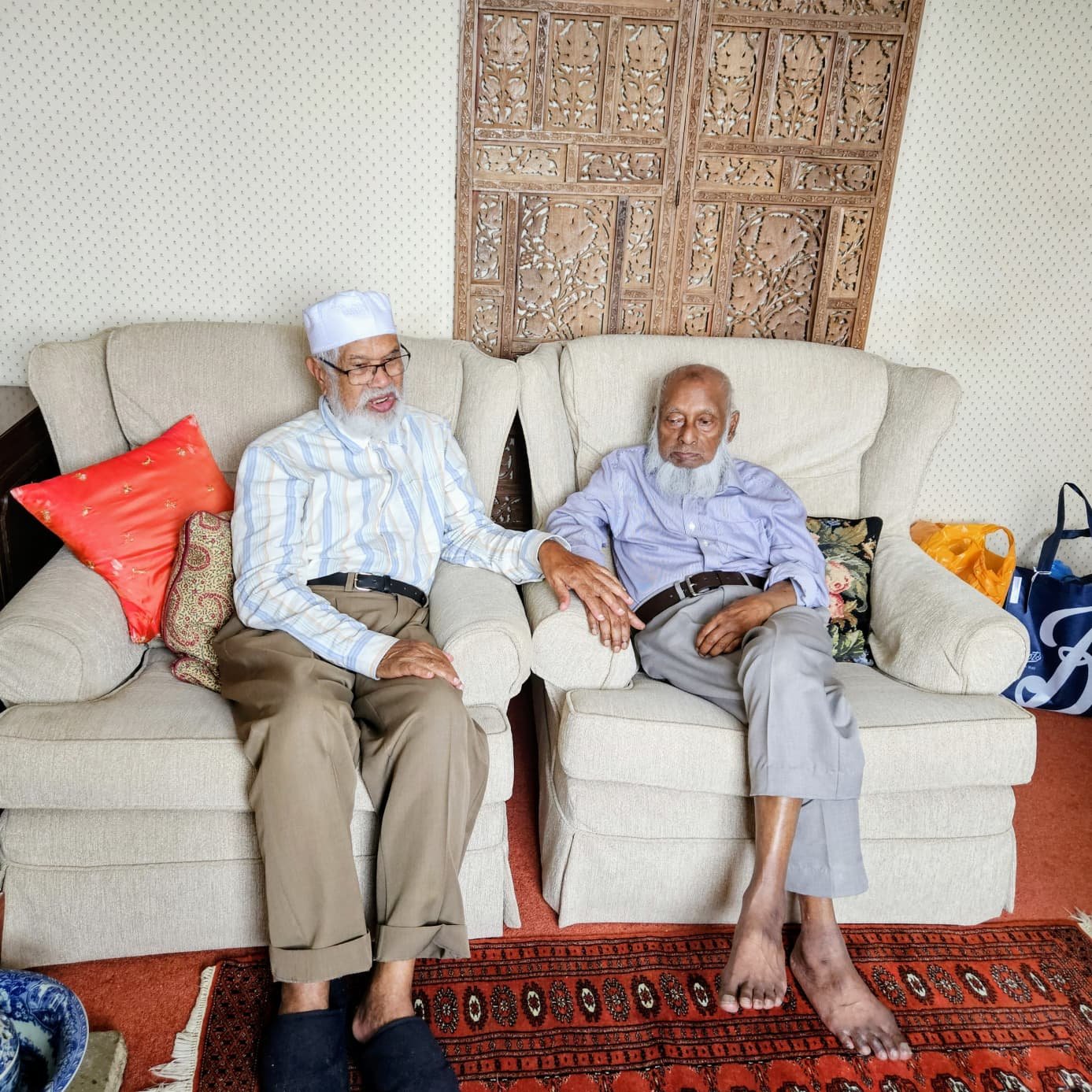
Abdul Wahab passed away in March 2024. He left behind a city that bears the shape of his labour across the restaurant trade, the housing sector, civic campaigning, and the quiet daily work of helping people find their place. His legacy lives in every institution he helped to build.